
Discover the Nutritional Goodness of Nuts and Seeds
Nuts and seeds are nutrient-rich foods that can be included in a balanced diet. They provide a combination of healthy fats, plant-based protein, dietary fiber, vitamins, minerals and naturally occurring plant compounds.
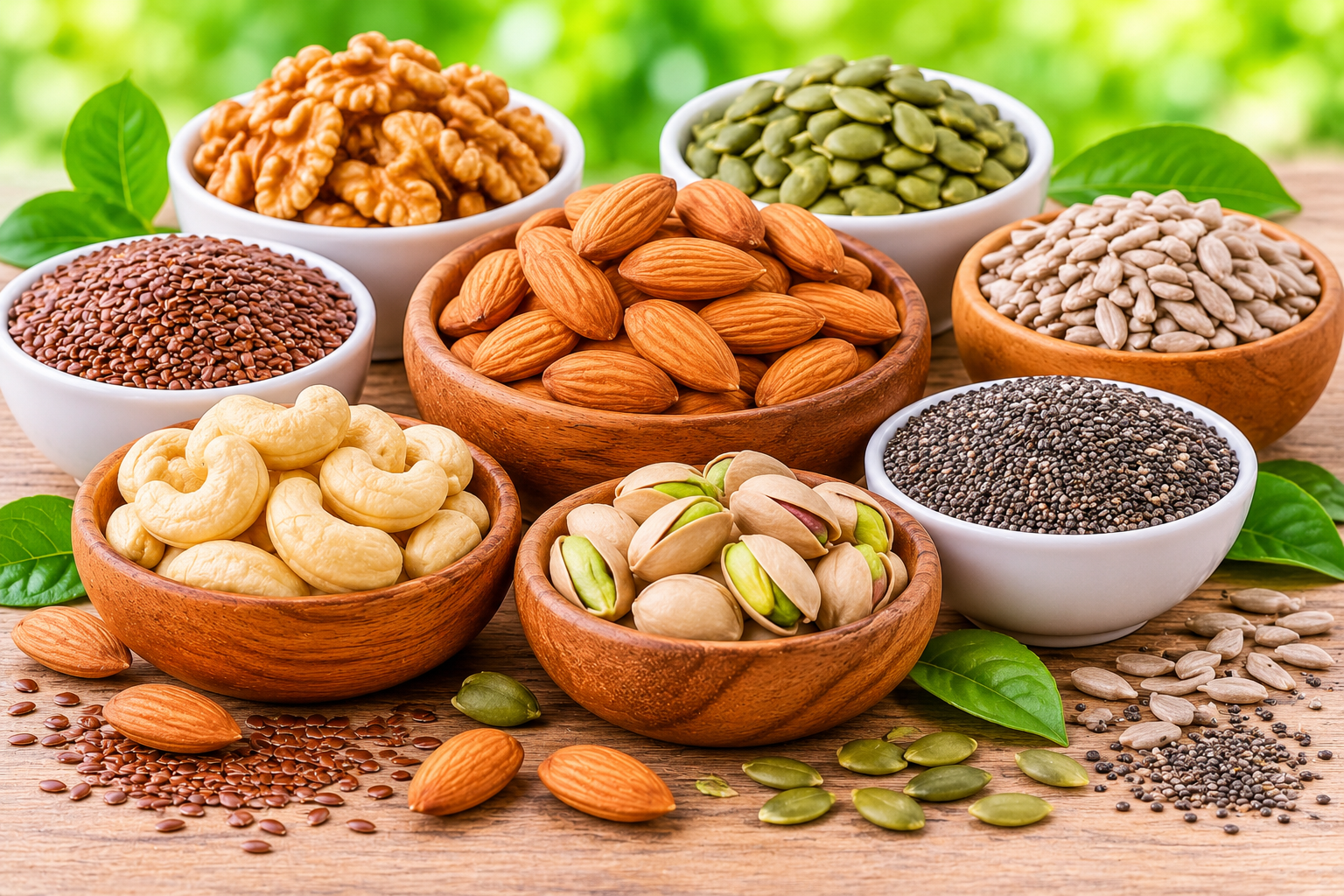
Almonds, walnuts, cashews, peanuts, flaxseeds, chia seeds, pumpkin seeds and sunflower seeds are popular choices in many households. Each offers a different combination of nutrients and can add flavor, texture and variety to everyday meals.
Nuts and seeds are generally energy-dense because they contain healthy fats. Enjoying suitable portions as part of a varied diet can help make meals more nutritious and satisfying.
In this guide, we explore the nutritional value of popular nuts and seeds, their important nutrients and simple ways to include them in everyday meals.
Explore Popular Nuts and Their Nutritional Benefits
1. Almonds – A Source of Vitamin E
Almonds provide monounsaturated fats, plant-based protein, dietary fiber, magnesium and vitamin E. Vitamin E acts as an antioxidant and helps protect cells from oxidative damage.
Almonds can be enjoyed raw or lightly roasted as part of breakfast or snacks.
Ways to enjoy almonds:
- Eat a small handful as a snack.
- Add chopped almonds to porridge.
- Combine almonds with plain yogurt.
- Use sliced almonds as a topping for homemade desserts.
2. Walnuts – Rich in Omega-3 Fatty Acids
Walnuts are particularly known for their alpha-linolenic acid (ALA), a plant-based omega-3 fatty acid. They also provide protein, fiber, magnesium and other beneficial plant compounds.
Ways to enjoy walnuts:
- Add chopped walnuts to breakfast oats.
- Combine them with fruit and yogurt.
- Use them in homemade salads.
- Enjoy a few walnuts as a snack.
3. Cashews – A Source of Magnesium and Copper
Cashews provide healthy unsaturated fats, plant-based protein, magnesium, copper and zinc.
Copper contributes to normal energy metabolism and the maintenance of connective tissues.
Ways to enjoy cashews:
- Add cashews to vegetable pulao.
- Use them in homemade curries.
- Include a small portion in trail mixes.
- Add chopped cashews to breakfast dishes.
4. Peanuts – An Affordable Source of Plant Protein
Peanuts are technically legumes, although they are commonly grouped with nuts in everyday diets. They provide plant-based protein, unsaturated fats, niacin, magnesium and dietary fiber.
Ways to enjoy peanuts:
- Eat roasted peanuts as a snack.
- Add peanuts to poha.
- Include them in homemade chutneys.
- Use unsweetened peanut butter on whole-grain toast.
5. Pistachios – A Source of Protein and Fiber
Pistachios provide plant-based protein, dietary fiber, potassium, vitamin B6 and healthy unsaturated fats.
Their natural color and crunchy texture make them a useful addition to a variety of dishes.
Ways to enjoy pistachios:
- Enjoy a small portion as a snack.
- Add chopped pistachios to yogurt.
- Use them as a topping for fruit bowls.
- Include them in homemade desserts.
6. Brazil Nuts – Rich in Selenium
Brazil nuts are particularly rich in selenium, a mineral that supports normal thyroid function and antioxidant processes in the body.
Their selenium content can be very high and varies considerably. Eating too many regularly can result in excessive selenium intake, so only a very small amount is appropriate.
Ways to enjoy Brazil nuts:
- Eat an occasional Brazil nut.
- Chop a small amount into breakfast bowls.
- Combine a small portion with other nuts.
Explore Popular Seeds and Their Nutritional Benefits
7. Flaxseeds – A Plant-Based Source of Omega-3
Flaxseeds provide alpha-linolenic acid (ALA), dietary fiber and lignans, which are naturally occurring plant compounds.
Ground flaxseeds are generally easier to digest than whole flaxseeds because grinding helps make their nutrients more accessible.
Ways to enjoy flaxseeds:
- Add ground flaxseeds to oatmeal.
- Mix them into plain yogurt.
- Include them in homemade smoothies.
- Add them to whole-grain flour preparations
They absorb liquid and form a gel-like texture, making them useful in breakfast recipes.
Ways to enjoy chia seeds:
- Soak chia seeds in milk or water.
- Add them to homemade puddings.
- Mix them into yogurt.
- Include them in smoothies.
9. Pumpkin Seeds – A Source of Magnesium and Zinc
Pumpkin seeds provide protein, healthy fats, magnesium, zinc and iron.
They can be enjoyed roasted or added to everyday meals for extra crunch and nutritional variety.
Ways to enjoy pumpkin seeds:
- Eat roasted pumpkin seeds as a snack.
- Sprinkle them over salads.
- Add them to breakfast bowls.
- Mix them into homemade granola.
10. Sunflower Seeds – Rich in Vitamin E
Sunflower seeds provide vitamin E, healthy unsaturated fats, protein, magnesium and selenium.
Vitamin E contributes to the protection of cells from oxidative damage.
Ways to enjoy sunflower seeds:
- Add sunflower seeds to salads.
- Sprinkle them over breakfast cereals.
- Mix them into homemade bread.
- Enjoy a small portion as a snack.
11. Sesame Seeds – A Source of Calcium
Sesame seeds provide healthy fats, protein, fiber, calcium, copper and other minerals. Their nutrient content can vary depending on whether they are hulled or unhulled.
They are commonly used in Indian cooking, sweets and traditional preparations.
Ways to enjoy sesame seeds:
- Add sesame seeds to vegetable dishes.
- Prepare homemade til chutney.
- Use them in whole-grain breads.
- Include them in traditional sesame ladoos.
12. Watermelon Seeds – A Source of Plant Protein
Watermelon seeds provide protein, healthy fats, magnesium, iron and zinc. They are often available roasted and can be included in snack mixes.
Ways to enjoy watermelon seeds:
- Eat roasted watermelon seeds.
- Add them to homemade trail mixes.
- Sprinkle them over salads.
- Include them in breakfast bowls.
Nutritional Comparison of Nuts and Seeds
The following table highlights some important nutrients found in popular nuts and seeds.
| Food | Notable Nutrients |
|---|---|
| Almonds | Vitamin E, magnesium, protein |
| Walnuts | Omega-3 ALA, copper, fiber |
| Cashews | Magnesium, copper, zinc |
| Peanuts | Protein, niacin, magnesium |
| Pistachios | Vitamin B6, potassium, fiber |
| Brazil nuts | Selenium |
| Flaxseeds | Omega-3 ALA, fiber, lignans |
| Chia seeds | Fiber, calcium, omega-3 ALA |
| Pumpkin seeds | Magnesium, zinc, protein |
| Sunflower seeds | Vitamin E, selenium |
| Sesame seeds | Calcium, copper, healthy fats |
| Watermelon seeds | Protein, magnesium, iron |
Note: Nutrient content varies with variety, growing conditions, processing and preparation.
Why Include Nuts and Seeds in Your Diet?
1. Healthy Fats
Many nuts and seeds provide unsaturated fats, including monounsaturated and polyunsaturated fatty acids.
2. Plant-Based Protein
They can contribute to daily protein intake, especially in vegetarian eating patterns.
3. Dietary Fiber
Many nuts and seeds provide fiber, which supports normal digestion and bowel regularity.
4. Vitamins and Minerals
They contain nutrients such as vitamin E, magnesium, zinc, copper, calcium and selenium.
5. Naturally Occurring Plant Compounds
Some nuts and seeds contain antioxidants and other plant compounds, including polyphenols and lignans.
6. Meal Variety
Nuts and seeds can add flavor, crunch and nutritional diversity to breakfast, snacks and main meals.
How Much Nuts and Seeds Should You Eat?
Nuts and seeds are nutritious but energy-dense foods. Portion sizes should fit into your overall dietary requirements.
Some practical suggestions include:
- Choose small portions rather than eating directly from a large packet.
- Include a variety of nuts and seeds during the week.
- Prefer unsalted and minimally processed varieties.
- Avoid excessive consumption of sugar-coated or heavily salted products.
- Consider individual nutritional requirements and food allergies.
A small handful of mixed nuts or a modest serving of seeds can be a practical addition to everyday meals. Individual needs vary.
Simple Ways to Include Nuts and Seeds in Everyday Meals
- Add almonds, walnuts or seeds to breakfast oats.
- Sprinkle pumpkin or sunflower seeds over salads.
- Include peanuts in poha and homemade chutneys.
- Add chia or ground flaxseeds to yogurt.
- Use sesame seeds in traditional Indian recipes.
- Prepare homemade trail mixes using unsalted nuts and seeds.
- Combine nuts and seeds with fresh fruit for a convenient snack.
Frequently Asked Questions
1. Are nuts and seeds good for everyday consumption?
For most people, nuts and seeds can be included regularly as part of a balanced diet. Portion sizes and individual dietary requirements should be considered.
2. Which nuts are rich in omega-3 fatty acids?
Walnuts are a well-known source of plant-based omega-3 fatty acids, particularly alpha-linolenic acid (ALA). Flaxseeds and chia seeds are also good plant sources.
3. Should almonds be soaked before eating?
Soaking almonds is a common food practice, but it is not essential for everyone. Almonds can be enjoyed either soaked or unsoaked.
4. Are roasted nuts as nutritious as raw nuts?
Both raw and dry-roasted nuts can provide valuable nutrients. However, added salt, sugar and oil can change their overall nutritional profile.
5. Can nuts and seeds provide protein?
Yes. Peanuts, almonds, pumpkin seeds, chia seeds and other varieties provide plant-based protein. They can complement other protein-rich foods such as pulses, dairy and legumes.
6. Are nuts and seeds suitable for people with diabetes?
Many unsweetened nuts and seeds can fit into a balanced eating pattern. Individual portions and overall meal planning are important. People with diabetes should follow advice from their healthcare professional or dietitian.
7. Can people with nut allergies eat seeds?
Some people with nut allergies can tolerate certain seeds, but allergies vary. Cross-contamination is also possible. Anyone with a diagnosed food allergy should seek appropriate medical guidance before trying a new food.
Final Thoughts
Nuts and seeds are small foods with a valuable combination of nutrients. From vitamin E-rich almonds and omega-3-rich walnuts to fiber-rich chia and flaxseeds, each variety offers something different.
Including a variety of nuts and seeds in suitable portions can add healthy fats, plant-based protein, dietary fiber, vitamins and minerals to everyday meals.
Choose varieties that are easily available, store them properly and enjoy them as part of a balanced and varied diet.
References and Further Reading
- Indian Council of Medical Research – National Institute of Nutrition (ICMR-NIN): Dietary Guidelines for Indians.
- National Institute of Nutrition, India: https://www.nin.res.in/
- National Institutes of Health – Office of Dietary Supplements: https://ods.od.nih.gov/
- Harvard T.H. Chan School of Public Health – The Nutrition Source: https://nutritionsource.hsph.harvard.edu/
Educational Disclaimer: This article is intended for general nutrition education and informational purposes only. It is not a substitute for individualized medical or dietary advice. People with food allergies, medical conditions or specific dietary requirements should consult a qualified healthcare professional or registered dietitian.