
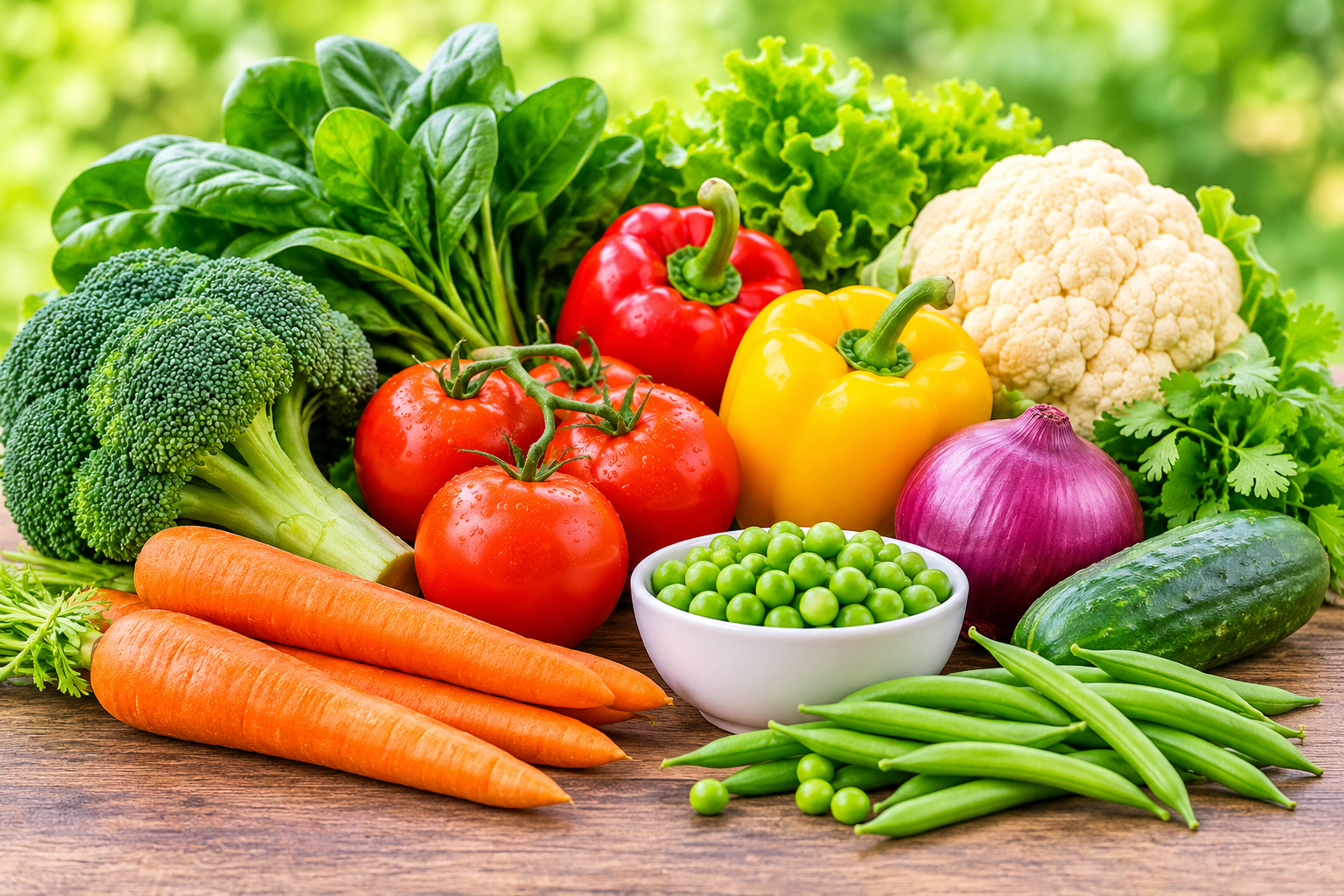
Discover the Nutritional Value of Everyday Vegetables
Vegetables are an important part of a balanced diet. They provide essential vitamins, minerals, dietary fiber, water and naturally occurring plant compounds that contribute to good nutrition.
Different vegetables offer different nutritional benefits. Green leafy vegetables, colorful vegetables and root vegetables all provide a variety of nutrients. Including a range of seasonal and locally available vegetables in everyday meals can help improve dietary diversity.
In India, vegetables such as spinach, carrots, tomatoes, cauliflower, cabbage, peas and bottle gourd are commonly used in traditional meals. They can be prepared in many ways and combined with cereals, pulses and other foods to create balanced meals.
In this guide, we explore the nutritional value of popular vegetables and simple ways to include them in everyday eating habits.
Explore Popular Vegetables and Their Nutritional Benefits
1. Spinach – A Source of Iron and Folate
Spinach is a green leafy vegetable that provides folate, vitamin K, vitamin A precursors and dietary fiber. It also contains non-heme iron and other minerals.
Including spinach in a varied diet can contribute to overall nutrient intake. The body absorbs iron from plant foods more effectively when they are eaten with vitamin C-rich foods.
Ways to enjoy spinach:
- Prepare spinach dal.
- Add chopped spinach to vegetable dishes.
- Use spinach in homemade soups.
- Include it in stuffed parathas.
2. Carrot – Rich in Beta-Carotene
Carrots are well known for their beta-carotene content. The body converts beta-carotene into vitamin A, which supports normal vision, immune function and healthy skin.
Carrots also provide dietary fiber and other plant compounds.
Ways to enjoy carrots:
- Eat washed carrots as a snack.
- Add grated carrots to salads.
- Prepare carrot soup.
- Include carrots in mixed vegetable dishes.
3. Tomato – A Source of Lycopene
Tomatoes provide vitamin C, potassium and naturally occurring plant compounds, including lycopene. Lycopene gives tomatoes their characteristic red color.
Tomatoes can be enjoyed raw or cooked and are commonly used in Indian curries, soups and salads.
Ways to enjoy tomatoes:
- Add fresh tomatoes to salads.
- Use tomatoes in homemade curries.
- Prepare tomato soup.
- Include chopped tomatoes in vegetable dishes.
4. Broccoli – A Nutrient-Dense Vegetable
Broccoli belongs to the cruciferous vegetable family. It provides vitamin C, vitamin K, folate and dietary fiber.
It also contains naturally occurring plant compounds called glucosinolates.
Ways to enjoy broccoli:
- Lightly steam broccoli.
- Add it to mixed vegetable dishes.
- Prepare homemade broccoli soup.
- Combine it with other vegetables in stir-fries.
5. Cauliflower – A Versatile Everyday Vegetable
Cauliflower provides vitamin C, folate and dietary fiber. It is a versatile vegetable that can be used in traditional Indian cooking as well as modern recipes.
Ways to enjoy cauliflower:
- Prepare gobi sabzi.
- Add cauliflower to mixed vegetable curry.
- Use it in homemade soups.
- Combine it with peas and other vegetables.
6. Cabbage – A Source of Fiber and Vitamin C
Cabbage provides dietary fiber, vitamin C and vitamin K. It belongs to the cruciferous vegetable family and comes in green, red and other varieties.
Ways to enjoy cabbage:
- Prepare cabbage sabzi.
- Add shredded cabbage to salads.
- Include it in homemade vegetable soup.
- Use it in vegetable parathas.
7. Green Peas – A Plant-Based Source of Protein
Green peas provide plant-based protein, carbohydrates, dietary fiber and several vitamins and minerals, including vitamin K and folate.
They can be included in a variety of Indian dishes and are especially popular in winter meals.
Ways to enjoy green peas:
- Add peas to pulao.
- Prepare matar paneer.
- Include peas in mixed vegetable curry.
- Add them to homemade soups.
8. Beetroot – A Colorful Root Vegetable
Beetroot provides folate, potassium, dietary fiber and naturally occurring pigments called betalains. Its deep red-purple color makes it a colorful addition to meals.
Ways to enjoy beetroot:
- Add grated beetroot to salads.
- Prepare beetroot sabzi.
- Include it in vegetable soups.
- Add cooked beetroot to homemade meals.
9. Bottle Gourd – A Water-Rich Vegetable
Bottle gourd, commonly known as lauki, has a high water content and provides small amounts of vitamins, minerals and dietary fiber.
It is widely used in Indian cooking and can be prepared in a variety of simple dishes.
Ways to enjoy bottle gourd:
- Prepare lauki sabzi.
- Add bottle gourd to dal.
- Make homemade lauki soup.
- Combine it with other vegetables.
10. Sweet Potato – A Source of Complex Carbohydrates
Sweet potatoes provide carbohydrates, dietary fiber, potassium and beta-carotene, particularly in orange-fleshed varieties.
They can be enjoyed as part of breakfast, snacks or main meals.
Ways to enjoy sweet potatoes:
- Roast or boil sweet potatoes.
- Add them to vegetable salads.
- Prepare homemade sweet potato chaat.
- Serve them as a side dish.
Vegetable Nutrition Comparison
Different vegetables provide different combinations of nutrients. The following table highlights some of their important nutritional components.
| Vegetable | Notable Nutrients |
|---|---|
| Spinach | Folate, vitamin K, iron |
| Carrot | Beta-carotene, fiber |
| Tomato | Vitamin C, lycopene |
| Broccoli | Vitamin C, vitamin K, folate |
| Cauliflower | Vitamin C, folate, fiber |
| Cabbage | Vitamin C, vitamin K, fiber |
| Green peas | Plant protein, fiber, folate |
| Beetroot | Folate, potassium, betalains |
| Bottle gourd | Water, small amounts of fiber |
| Sweet potato | Beta-carotene, potassium, fiber |
Note: Nutrient content varies with vegetable variety, growing conditions, freshness and cooking method.
Why Should You Include Different Vegetables in Your Diet?
Eating a variety of vegetables can help provide a wider range of nutrients.
1. Dietary Fiber
Vegetables contribute dietary fiber, which supports normal digestion and helps maintain bowel regularity.
2. Vitamins and Minerals
Different vegetables provide nutrients such as vitamin C, vitamin K, folate, potassium and beta-carotene.
3. Plant Compounds
Many vegetables contain naturally occurring compounds such as carotenoids, lycopene and polyphenols.
4. Hydration
Vegetables with high water content, such as cucumber and bottle gourd, contribute to daily fluid intake.
5. Dietary Variety
Including vegetables of different colors and types makes meals more varied and nutritionally diverse.
Simple Tips for Including More Vegetables in Everyday Meals
- Add at least one vegetable preparation to your main meals.
- Include green leafy vegetables regularly.
- Choose seasonal and locally available vegetables.
- Combine vegetables with pulses, cereals and other food groups.
- Wash vegetables thoroughly before cutting and cooking.
- Avoid excessive cooking when possible, as some nutrients are sensitive to heat and water.
- Use different cooking methods such as steaming, boiling, roasting and light sautéing.
Frequently Asked Questions
1. How many vegetables should I eat daily?
The amount depends on age, activity level, health and overall dietary requirements. Follow a balanced eating pattern that includes a variety of vegetables. Refer to the ICMR-NIN dietary guidelines for India-specific recommendations.
2. Are raw vegetables better than cooked vegetables?
Both raw and cooked vegetables can be nutritious. Some nutrients are better retained in raw vegetables, while cooking can improve the availability of certain nutrients. A combination of both is a practical choice.
3. Which vegetables are rich in iron?
Green leafy vegetables such as spinach contain non-heme iron. Eating them with vitamin C-rich foods, such as tomatoes or lemon, can help improve iron absorption.
4. Are frozen vegetables nutritious?
Frozen vegetables can retain many of their nutrients when properly processed and stored. They can be a convenient alternative when fresh seasonal vegetables are not available.
5. Should I eat vegetables of different colors?
Yes. Different colors often indicate different naturally occurring plant compounds and nutrients. Including green, red, orange, yellow and purple vegetables can improve dietary variety.
6. What is the healthiest way to cook vegetables?
Steaming, light sautéing and cooking with limited water can help retain nutrients. The best method also depends on the vegetable and the overall meal.
Final Thoughts
Vegetables are an essential part of a balanced and varied diet. From leafy greens and colorful root vegetables to cruciferous vegetables and seasonal produce, each type offers its own nutritional qualities.
Including different vegetables in everyday meals is a simple way to improve dietary diversity and enjoy a variety of flavors, textures and nutrients.
Start with seasonal vegetables that are easily available in your local market and explore different ways to prepare them.Final Thoughts
Nuts and seeds are small foods with a valuable combination of nutrients. From vitamin E-rich almonds and omega-3-rich walnuts to fiber-rich chia and flaxseeds, each variety offers something different.
Including a variety of nuts and seeds in suitable portions can add healthy fats, plant-based protein, dietary fiber, vitamins and minerals to everyday meals.
Choose varieties that are easily available, store them properly and enjoy them as part of a balanced and varied diet.
References and Further Reading
- Indian Council of Medical Research – National Institute of Nutrition (ICMR-NIN): Dietary Guidelines for Indians.
- National Institute of Nutrition, India: https://www.nin.res.in/
- National Institutes of Health – Office of Dietary Supplements: https://ods.od.nih.gov/
- Harvard T.H. Chan School of Public Health – The Nutrition Source: https://nutritionsource.hsph.harvard.edu/
Educational Disclaimer: This article is intended for general nutrition education and informational purposes only. It is not a substitute for individualized medical or dietary advice. People with food allergies, medical conditions or specific dietary requirements should consult a qualified healthcare professional or registered dietitian.
References and Further Reading
- Indian Council of Medical Research – National Institute of Nutrition (ICMR-NIN): Dietary Guidelines for Indians.
- National Institute of Nutrition, India: https://www.nin.res.in/
- World Health Organization: Healthy Diet
Educational Disclaimer: This article is intended for general nutrition education and informational purposes only. It is not a substitute for individualized medical or dietary advice. People with specific medical conditions or dietary requirements should consult a qualified healthcare professional or registered dietitian.